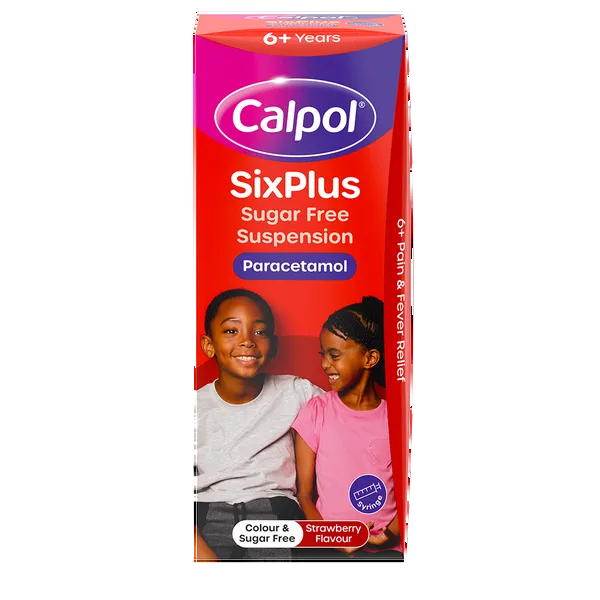
Do not exceed stated dose. Immediate medical advice should be sought in the event of overdose, even if you feel well because of the risk of delayed serious liver damage. Do not take with other products containing paracetamol.
Do not give your child this medicine if:
- S/he is allergic to paracetamol or any of the other ingredients of this medicine (listed in section 6 - Further Information).
- S/he has ever had a bad reaction to any of the ingredients.
- S/he is taking anything else with paracetamol in it.
If any of these apply, get advice from a doctor or pharmacist without using CALPOL®.
Warnings and precautions:
Talk to your doctor or pharmacist before giving your child this medicine if:
- Your child has serious kidney or liver problems.
- Your child has an inherited intolerance to fructose or been diagnosed with an intolerance to some other sugars.
During treatment with this medicine, tell your doctor straight away if:
- you have severe illnesses, including severe renal impairment or sepsis (when bacteria and their toxins circulate in the blood leading to organ damage), or you suffer from malnutrition, chronic alcoholism or if you are also taking flucloxacillin (an antibiotic). A serious condition called metabolic acidosis (a blood and fluid abnormality) has been reported in patients in these situations when paracetamol is used at regular doses for a prolonged period or when paracetamol is taken together with flucloxacillin. Symptoms of metabolic acidosis may include: serious breathing difficulties with deep rapid breathing, drowsiness, feeling sick (nausea) and being sick (vomiting).
Other medicines and paracetamol:
Please inform your doctor or pharmacist if you are taking:
- metoclopramide or domperidone (used to treat nausea and vomiting)
- cholestyramine (used to treat high cholesterol)
- anticoagulants (drugs that thin the blood, such as warfarin)
- anticonvulsants (drugs to treat epilepsy)
- flucloxacillin (antibiotic), due to a serious risk of blood and fluid abnormality (called metabolic acidosis) that must have urgent treatment (see section 2).
If you are not sure about the medicine your child is taking, show the bottle or pack to your pharmacist. If any of these bullet points apply, talk to a doctor or pharmacist.
If adults take this medicine:
The following additional warnings are included in case an adult takes this product:
- You can use this medicine while you are taking oral contraceptives ('the pill'), but it may not work so well on your pain or fever.
- If you drink large amounts of alcohol, talk to your doctor before you take this medicine. You may be more susceptible to the side-effects of paracetamol. If this applies to you, talk to a doctor before use.
- If necessary, the medicine can be used during pregnancy. You should use the lowest possible dose that reduces your pain and/or your fever and use it for the shortest time possible. Contact your doctor or pharmacist if the pain and/or fever are not reduced or if you need to take the medicine more often.
- Ask your doctor or pharmacist for advice before taking this medicine if you are breastfeeding.
Some of the ingredients can cause problems:
- Methyl (E218) and propyl (E216) parahydroxybenzoate may cause allergic reactions which could possibly be delayed.
- The sorbitol (E420) and maltitol content of this product means that this product is unsuitable for people with inherited intolerance to fructose.
- This medicine contains 1935 mg of sorbitol liquid (E420) per 5 ml dose which is equivalent to 387 mg/ml and 2.04 g maltitol liquid. Sorbitol is a source of fructose. If your doctor has told you that your child has an intolerance to some sugars or if your child has been diagnosed with hereditary fructose intolerance (HFI), a rare genetic disorder in which a person cannot break down fructose, talk to your doctor before your child receives this medicine. Sorbitol may cause gastrointestinal discomfort and a mild laxative effect. Maltitol may have a mild laxative effect. Calorific values: 2.6 kcal/g sorbitol and 2.3 kcal/g maltitol.
- This medicine contains less than 1 mmol sodium (23 mg) per 5 ml, that is to say essentially ‘sodium-free'.
- This medicine contains 20.92 mg propylene glycol (E1520) in each 5 ml dose, which is equivalent to 4.18 mg/ml.
- This medicine contains 0.05 mg benzyl alcohol in each 5 ml which is equivalent to 0.01 mg/ml. Benzyl alcohol may cause allergic reactions. Ask your doctor or pharmacist for advice if you are pregnant or breastfeeding, or if you have a liver or kidney disease. This is because large amounts of benzyl alcohol can build-up in your body and may cause side effects (called "metabolic acidosis").